
A little delayed but just for reference … a 2014 calendar from ARAMCO with English and Arabic dates for KSA.
Working in Saudi Arabia has given us a new outlook to Islamic art and the different geometric patterns and design in local mosques and sites.
Found this wonderful PDF book for designing and working with shapes – see below.
Islamic Art and Geometric Design
Enjoy
Preparing for the TOEFL exam and need some help on how the grading works – check out the below:
Good Luck …
Posted for a friend ….
FOOD Contact Numbers in Makkah & Madina
( Numbers not starting with zero. are landline numbers )
Makkah code: +966 (from internal Saudi landline number prefix 012)
Bilal 576 1687 / 053 502 915
Dawood 574 8059 / 542 1020
Maimuna 542 9710
Yunus Patel 574 6041
Rabia 554 1749
Mustaq Moosa 574 9076
Choohan 542 9710 / 052 773 283
Medina +966 (from internal Saudi landline number prefix 012)
Shamima and Omar
826 4995 / 054 355 325
Tasty Eats 4 Food
Shaukat Ismail 0547861786 Nacema Ismail 0547867786.
Ayesha Desai 839 2740
Miriam Nakooda
821 2315 / 823 2772
Ahmed Nakooda 824 0358
Akhalwaya steakhouse (steaks)
Tarik Hizam Road, next to KUDU, Al Madina, Al Madinah, Saudi Arabia +966 4 849 2786
facebook page – https://www.facebook.com/SteaksakhalwayasMadina
Dawood akhalwaya
054 254 7117. (Local is lekker)
Local chicken and meat
Need a vehicle for transfers between Madeena & Makkah
Or Madeena and Jeddah.
Call M.PATEL (Abu Ahmed)
Cell + 9665 5351 5001
Cell + 9665 6715 4637
BB 26257358
Credits to > http://www.nanima.co.za/2011/04/hajj-and-umrah-checklist/#sthash.WTO6hvSO.dpuf
My wife and I have been working at Berlitz Al Ahsa since 2010 and we would like to share our experiences to date.
From the top …
The interview process was very swift and the company fulfilled our request to arrive together. We were welcomed to Saudi Arabia by the Manager of Instruction. Our apartment is centrally located and within walking distance to restaurants, supermarkets and malls. The furnished apartment is comfortable and equipped with everything detailed in our contracts.
Our goal was to experience a different culture, living amongst the local people has enhanced this. Al Ahsa isn’t a large, buzzing city compared to Riyadh, Jeddah or Dammam however is growing rapidly. Al Ahsa has become home and a little part of us now. It’s rich history, traditional values and culture has fascinated us. We love exploring the old castles, museums and markets which are alive with flavour.
The training on arrival was intensive and effective. It thoroughly prepared us for teaching according to the Berlitz requirements. The trainer was experienced and knowledgable and it equipped us with techniques we still use daily.
The students are pleasant, respectful and motivated to learn. Classroom sizes are small making teaching an overall personal experience.
The managers and administrative staff are friendly, helpful and do their best to assist where needed. In general teaching is teaching as there is very little admin work, compared to previous schools – this allows someone who is passionate about teaching to teach as we spend most of our times in the classroom. Selected classrooms have SmartBoards and technology components. We are continuously supported through workshops, meetings etc. which encourages development and collaboration.
Berlitz Al Ahsa also allowed us to work remotely when we needed to return home for some time. Additionally management went out of their way to assist us when we needed to upgrade our medical insurance – this was truly remarkable. Furthermore, Berlitz Al Ahsa has fulfilled all benefits, to date as per the Saudi labor law.
In terms reimbursements, claims and salary payouts etc. we have never experienced any delays ever.
I must add that it’s exciting to work in a rapidly growing company. 2013 has seen many new projects and the staff numbers have doubled.
It’s been an amazing journey where we have made lots of friends along the way. Interacting with people of different nationalities and cultures has been one of our best experiences. This to me has been a strong personal growth point.
Overall I would rate Berlitz Al Ahsa 4 out of 5. Although there is some room for improvements, over the past three years I have seen a lot of positive changes, which indicates to me that management and the company is moving in the right direction.
Anyone looking to work in Saudi Arabia and looking for a good, trusted Saudi visa agent – give Mahmoud a call – highly recommended
Mahmoud A Farah
Adda recruitment, visa and legalisation
Tel: +27 (0) 12 751 1600
Fax: +27 (0) 86 602 5770
Mobile: +27 (0) 82 902 4500
Email: Mfarah@webmail.co.za
Office No: 1; Unit 106
Java Centre; 285 Lynnwood Road
Menlo Park; Pretoria; 0081
Working in Saudi sometimes make us homesick with the weirdest things like a 13 line (30 Juz) Transvaal Press South African Quran.
So I found a scanned copy online (http://myummah.co.za/) and this is just a re-share.
File is in reduced size PDF at 28mb. Compatible on tablets and Smartphones etc.

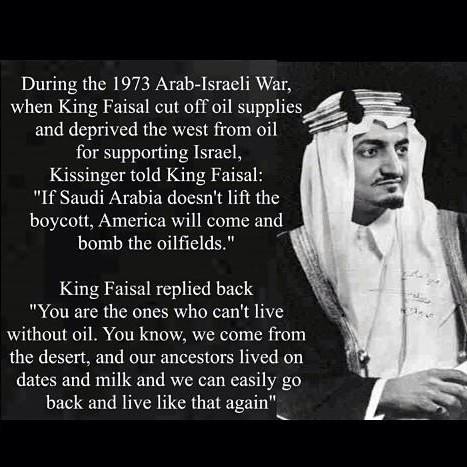
Prince Amr bin Mohammed Al-Faisal said “after 1967 and the fall of Jerusalem to the Israelis, that was a turning point in King Faisal’s life. He never smiled again. I didn’t see him smile much, and he became very quiet and contemplative.”
During the 1973 Arab-Israeli War, Faisal withdrew Saudi oil from world markets, in protest over Western support for Israel during the conflict. This action quadrupled the price of oil and was the primary force behind the 1973 energy crisis. When King Faisal cut off oil supplies and deprived the west from oil in October 1973, Henry Kissinger met up with King Faisal so he could make him change his mind
Kissinger told King Faisal: “If Saudi Arabia doesn’t lift the boycott, America will come and bomb the oilfields”
The King Faisal replied back “you are the ones who cant live without Oil, You know, we come from the desert, and our ancestors lived on dates and milk and we can easily go back and live like that again”
Henry Kissinger also said in his memoirs that when he met King Faisal in Jeddah he was sad, so he made a joke and told King Faisal, ” My plane ran out of oil so will your majesty order it to get supplied with oil and we are ready to pay at international rates ? “
King Faisal didn’t laugh and he raised his head and looked at him and said :
” And I’m an old man who wishes to pray in Al-Aqsa before I die so will you help me in my wish ? “
This meeting and dinner with Henry Kissinger was organized in the middle of nowhere – the dark, cold deserts of Saudi Arabia that the Arab lands are so famous for. Then King Faisal said “You must have noticed, nothing in this dinner tonight carries foreign mark. The meat on the table comes from locally hunted camels. The delicacies all made on Arab land, from Arab resources. The lamps that give us light tonight, burn on fuel extracted from camel fat. If you dare come here, we would set our wells on fire and wander into the deserts. We, as you see, would survive. What would you do?”
King Faisal ended relations with more than 42 countries that stood with Israel. King Faisal was also a strong supporter for Islamic revivalism and called for the Khilafah. He was against Arab nationalism, socialism, communism, Zionism and wanted nothing but a unification of the Muslim lands to revive the Khilafah.
Grand Mufti of Saudi said right in front of King Faisal’s face, that the Muslim rulers are the cause of problems in the Muslim world. King Faisal not only allowed his comments but agreed. Nowadays any criticism a leader gets, they imprison those who criticise.
On one occasion, Mawlana Ali Miyan Nadwi was invited to meet King Faisal. The guards showed Mawlana Ali Miyan in, and he entered the meeting area in the palace to meet the king. Mawlana looked around, not cursorily, but closely, as if in wonderment. The king inquired as to why he was looking around with such amazement.
Mawlana answers, “We too once had a king who ruled over the (present) India, Pakistan, Sri Lanka, Burma, Nepal and other places, and out of the fifty-two years of his rule he spent twenty on the horseback. Muslims, in his time, enjoyed freedom and happiness. Life was easy for them. Yet, the king was such that he wore patched clothes. He scribed the Qur’an and knitted caps to earn his living, and used to stand crying before his Lord in night vigils. Those were the times when simplicity and poverty characterised the lives of the rulers, and contentment and fulfillment was the masses’ share. Today, on seeing this palace of yours I wonder how times have changed! Today, our kings and rulers enjoy the riches of this world when the Muslims are rendered homeless in Palestine, their blood having lost all worth in Kashmir, and stripped of their identity in the middle-east. Today, when I stepped into your palace, I got lost in the bewildering comparison (between these and the earlier times),”
Then Ali Miyan falls silent.
Tears start streaming down the king’s face. Soon the streaming tears turn into profused weeping. The king is heard weeping and The guards, all worried, rushed in to see what the matter was. The king gestured them to leave. Then he addresses the Mawlana: “those kings were like that because they had advisers like you. (I wish) you keep coming here and advising us, the weaker ones!”
Faisal in his time in power had made a close alliance with Pakistan. In Pakistan, Lyalpur the third largest city was renamed to “Faisalabad” (city of Faisal) in 1979 in honour of King Faisal. Also the Faisal Mosque in Islamabad was named after King Faisal. The main highway in Karachi was renamed Shahrah-e-Faisal and a suburb close to Karachi Airport was also renamed Shah Faisal Colony. One of the two major air force bases in Pakistan’s largest city, Karachi, is named “PAF Base Faisal” in honour of King Faisal.
In King Faisal’s last speech to the Muslim world, he said:
“My brothers, what are you waiting for? For the worlds conscience to rise by itself? Where is it? Masjid Al Aqsa is calling for you, crying for your help, my brothers, to save it from the catastrophe-plague its going through. So what are we fearing? Whats stopping us? Do we fear death?! Or is there a better death, a more honourable death than dying while fighting for the sake of Allah. Oh my Muslim brothers! We want a revolution? And an Islamic revival! A non-communist, non-racist rise! And undivided. But an Islamic call, for the jihad for the sake of Allah! For the sake of our religion and our faith! Defending our Holy places. And I ask Allah, That if he destined for me to die, That I die a martyr! Shaheed for the sake of Allah! Please forgive me if im shaken but when I see Al Aqsa and our holy places gets violated, degraded and offended with blasphemies and moral decays. For I sincerely pray to Allah, that if he didn’t destine for us to do Jihad and liberating the holy lands, THEN HE DOESN’T KEEP ME ALIVE FOR ONE MOMENT LONGER!”
Later after this speech, he was assassinated on March 25, 1975, his last word before his death was “Allah”. He was assassinated by his nephew. When King Faisal was being taken to the hospital after the gunshots, his dying wish was for his nephew to be spared from execution (although he was executed anyway). Even when death was knocking on his door, he was still wise and humble.
Credits:
https://www.facebook.com/OriiginalRoyalAsiiansz/posts/476265622385848
Interested in the labor law in Saudi Arabia?
Read the translated English version here
Credits: http://www.sagia.gov.sa/Documents/Laws/labor_law_en.pdf